Plant Sequoias

When I was a small child, I visited the Redwood State Park in California.  My dad’s last posting in the Army was to Ft. Lewis Washington–for one year.  We lived in Virginia.  So my dear, dear parents decided to make trekking across the country into an adventure.  I don’t remember everything we did, but thankfully, my mom took hundreds of pictures.

Redwoods and Sequoias are huge.  They are also old.

It takes a sequoia tree 250 years just to grow into a decent-sized tree.  It is still considered “young” at this stage.

At 500-750 years, a sequoia reaches its ‘adult’ height.  

Old things haunt me.  I have always been fascinated by history.  Echoes of things and times that I have never seen and can only barely imagine fill me with a sense of weight.  It’s the same feeling I get when I stare at the ocean.  Civilizations rise and fall, wars are fought, people are born, grow up, and die–and still the tide goes in and out and the waves lap gently on the beach.

Eternity is frightening.  But eternity is also a source of hope.

In a song from his latest album, “Peopled with Dreams,” artist John Mark Mcmillan has a song titled, “The Road, the Rocks, and the Weeds”.  In it, he muses on life, suffering, and the place of God in it all.  But it’s the last chorus that always strikes me–so much so that I have it taped to my desk at school:

“So shall I plant sequoias, and revel in the soil

Of a crop I know I’ll never live to reap?

Then sow my body to my Savior

And my heart unto my Maker

And spread me on the road, the rocks, and the weeds.”

If you plant a sequoia seed, you won’t live to see it become a tree.  You won’t live to see anything start to sprout from the ground.  You will live your entire life by faith, believing that the seed is still alive, watering and taking care of it, trusting nature to take its course–even after you are gone.

What does it mean to live your life, knowing you won’t see everything–maybe not anything–that you’ve dreamed come to pass?

What does it mean to plant sequoias?

I am, by nature, an impatient person.  Especially if I know exactly where I want to go, or what I want to do.  I don’t deal with roadblocks well.

But the Bible is full of stories that all teach the same thing: you have to wait to see a promise fulfilled.  And sometimes, you might have to live and die not seeing the end of what was promised.

In Hebrews 11, there is a list of people known as “heroes of the faith”.  These are people that are rightly praised for living lives that honored God and showed trust in Him.  It closes with this sobering note, however:

“All of these people were still living by faith when they died.  They did not receive the things promised; they only saw them from a distance, admitting that they were foreigners and strangers in their own country.”

Teaching, I have found, is like planting sequoias.

You pour as much as you can into the children you teach.  Manners and grammar, spelling and social skills, compassion and comprehension.  I want my students to learn better English, but I also want them to learn to be good people.  To “be brave, tell the truth, and never get up”–a line from our daily Code.  Most important, I try to teach them about God, and how much they need Him.

But you don’t know if those lessons stick, sometimes.  It can seem a long while before change occurs, especially with the ones that most need love.  

There are days that I’m metaphorically staring at the ground, knowing that I’m not likely going to see my  “seeds” start coming up any time soon.  I won’t know the impact that some chance remark I made had on a student.  I won’t know if my efforts helped or hindered some.

And the planter won’t know if his sequoia ever grows tall.

So why “plant sequoias”?  

Because it shows your faith.  It shows that you believe in something greater and more grand than the scope of your seventy/eighty/ninety years on this earth.  It means you are investing in something with the same trust as those in Hebrews 11–that even if you don’t see the promise come true right now, it will come to pass.

And nothing will be wasted.

“Meaningless, meaningless–everything is meaningless!” says the writer of Ecclesiastes.

He was right, after a fashion.  So many of the things we chase are like the sand on the beach–easily knocked down and swept away.  

Yet we long to do something that lasts.  We want to plant sequoias.

We have mortality in our bones, but eternity in our hearts.  

Why?

So that we may seek the one who made us–the author of all that lasts.

“Shall I plant sequoias?  And revel in the soil

Of a crop I know I’ll never live to reap?”

Yes.

Because when you sow your body to your Maker, you trust God with the result of your sacrifice.

Right now, it’s easy to feel like the world is one big mess, and everything keeps getting worse.  Our lives feel small and powerless.

Plant sequoias, anyway.  Trust that the one who wrote your dreams will not let them shrivel up and die.  Trust Him for the process.

When you are connected to God and His plans, you can know that your dreams and desires will not turn up void.  

It’s a balancing act–humility and vision.  Humility to know that I can’t accomplish anything without God, and vision to know that with Him, through Him, I can accomplish anything.

As I started this year, I felt a stirring in my heart that 2021 would be a year of return for me, personally.  Specifically, a return to joy and passion.  The last two years have been hard and involved a lot of growing.  It felt like a lot of the passion I once had has become dry and small.

I want to plant sequoias.  I want to dream again.

And so, I plan to spend this year investing in the lives God has placed in front of me.  I also plan to spend it writing a book–several books–and delivering on a dream I’ve had for a long time.

Most important, I want to better know God, and through that know myself and who I was made to be.

May I be spread out on the road, the rocks, and weeds this year–a testimony to my Maker.
Emmanuel In the Kingdom of Death

Lord Jesus, come yourself, and dwell with us, be human as we are, and overcome what overwhelms us. Come into the midst of my evil, come close to my unfaithfulness. Share my sin, which I hate and which I cannot leave. Be my brother, Thou Holy God. Be my brother in the kingdom of evil and suffering and death.”

*********************************************

And so we come to Christmas Day.  I’ll come to it before my family and American friends do, this year.  Oh, the joys of time zones.

At the end of last year, I thought that 2019 had been the hardest year of my life.  I still think it was, for me personally.  But in terms of world trauma, 2020 surely has last year beat.

I’m still shaking my head in disbelief at all that this year has brought.  I’m not really sad or angry or…much of anything.  I suppose I’m grieved, but more in a quiet, apprehensive sense—thinking, “alright, surely it can’t get worse”.

I’ve seen enough movies to know never to say that out loud.

And it’s Christmas—again.

One of my favorite Christmas quotes comes from the Advent devotional I read every year, which contains excerpts from the writings and sermons of Dietrich Bonhoeffer.  It reads:

“We all come with different personal feelings to the Christmas festival.  One comes with pure joy…others look for a moment of peace under the Christmas tree…others will approach Christmas with great apprehension.  It will be no festival of joy to them.  And despite it all, Christmas comes.  Whether we wish it or not, whether we are sure or not, we must hear the words once again: Christ the Savior is here!  The world that Christ comes to save is our fallen and lost world.  None other.”

In a time and place when it is so tempting to hate this world, it is comforting to know that God does not look upon our earth with revulsion—even though He would have every right to.  He loves the Earth.  He made it.

And so, He drew near.  And He still does.

Sin is not a laughing matter, and God is a God who loves justice and fairness.  We need to live our lives in view of that truth.  But I am always astonished at the simple fact that when we do sin, God’s typical first act is not to go away, but to come near.

Adam and Eve, listening to the voice of Satan, disobeyed God.  The very next moment?  He’s walking in the Garden, calling out for them.  “Where are you?” He asks.  “I’m here.”

I recently finished reading Leviticus, a book of the Bible that most sane Christians avoid, and one that often kills people’s New Year’s resolutions to read the Bible in one year.  In chapter 10 of this book, it records the unfortunate story of the sons of Aaron, the first priest.  They offered sacrifices in a way that they were not supposed to, even after God had given explicit instructions on what they were supposed to do.  And so, they were killed.  Dropped down dead.

What is God’s first recorded action in this chapter?  Speaking to Aaron.  Not keeping it distant by using Moses as a mouthpiece, but speaking to Aaron, Himself.

God is not wringing His hands over the state of our world.  When people ask, “where was God when x thing happened?” the answer will always be “He was there”.

That’s not an easy thing to believe.  It may raise more questions than it answers.  But it is the truth.  He is, was, and will forever be Emmanuel—God with Us.

Therefore, I can have hope, even when this Christmas looks a lot different than what I wished for.  Even when the world seems like a never-ending bonfire, with the worst of human failings on display.  Even when things hurt.

God doesn’t run away when things go wrong.  He comes near.  And through Him, I can also come near to things and people and situations that are hard.  I can give my all to my friends, my students, my job, and my community, instead of wallowing in my own desires and selfishness. I don’t have to fear not having enough energy or time to myself, if I help someone else. I can give and be refilled

So, this is Christmas, and I’m not afraid–just like the angels ordered. Because born to us, with us, is a Savior who comes to bring good news to the crushed, joy to the broken, and a light that darkness will never overcome.

And my prayer is that we can believe it.

**********************************************

“And then, just when everything is bearing down on us to such an extent that we can scarcely withstand it, the Christmas message comes to tell us that all our ideas are wrong, and that what we take to be evil and dark is really good and light because it comes from God. Our eyes are at fault, that is all. God is in the manger, wealth in poverty, light in darkness, succor in abandonment. No evil can befall us; whatever men may do to us, they cannot but serve the God who is secretly revealed as love and rules the world and our lives.”

I Won’t Be Home for Christmas, And Neither Was Jesus

You know the song. Its engineered to make you cry, or at the very least, get nostalgic.

“I’ll be home for Christmas,

You can count on me

Please have snow, and mistletoe

And presents by the tree…

Christmas Eve will find me

Where the love light gleams

I’ll be home for Christmas

If only in my dreams…”

The song was written in 1943 from the perspective of a soldier fighting in World War Two. The reality was, the singer likely COULDN’T get home for Christmas that year. His homecoming was “only in his dreams”.

This year, for the first time in my life, I’m joining that soldier.

Covid sucks. There’s no nice way to say it. And with Thailand having strict quarantine rules, there is no feasible way for me to travel to America and back for Christmas, and still be on time for the school year resuming in January.

No snow for me, this year. (Not that I ever got much in Virginia Beach, anyway.)

I was thinking about this song the other week, and feeling a little melancholy. Sure, it’s only one Christmas. But this is the first time in my life I wont be with my family for the holiday.

And then, I realized something.

The whole point of Christmas is that Jesus wasn’t home.

G.K. Chesterton, a famous author that inspired C.S. Lewis in many philosophical ways, wrote a poem in 1912 called “The House of Christmas” I’ll link to the whole thing, but the ending stanza always gets me:

“To an open house in the evening

Home shall men come

To an older place than Eden

And a taller town than Rome

To the end of the way of the wandering star

To the things that cannot be and that are

To the place where God was homeless 

And all men are at home.”

Christmas, especially secular Christmas in America, has become all about family, friends, and “togetherness”. And none of that is bad. I love having an excuse to hang out with my family for the holidays and be in the same place for once. But it’s easy to deify family and forget the reality of Christmas.

The reality of Christmas is that Jesus the Christ left everything familiar to be born as a BABY, in a cave in Bethlehem. There probably wasn’t an innkeeper involved (that will be another post coming soon) but it was still a messy, bloody affair–as all births are.  His parents were in their ancestral town, but probably didn’t have immediate family around.

God became homeless to lead us home.

The Son of God became a farang (foreigner) in a foreign land, to reconcile us into the Kingdom of His Father.  That is Christmas. That is the point.

So yes, I’m going to miss America this Christmas. I’m going to miss weather below 80 degrees fahrenheit (if I’m lucky), and real Christmas trees, and Chikfila’s peppermint milkshake. I’m going to miss hugs and fireplaces and Christmas dinner. I’m going to miss my family and friends.

But I’m also going to meditate on the fact that being far from home at the command of God is, in fact, one of the most “Christmas” things you could do.

**********

Next week, all the teachers at my school will celebrate Thanksgiving in classic style–with tons of food (hurray!). But because Thanksgiving is not recognized here at all, malls and stores are already well into “the holiday season”. It’s lovely and beautiful, but it also makes my heart sad.

“If only you knew.” I thought last weekend, traipsing around one mall. “If only you knew the truth.”

This year, the house church group I am part of has begun a Sunday afternoon service that is meant to be a place to bring any Thai friends and neighbors. So far, we have had one girl (a barista at our local coffee place) accept Christ!  A friend of mine that taught at my school last year also recently became a Christian. So, even in the midst of everything, there is fruit growing.

Please pray for me and my school community this season, that we would shine the light of Christ to our neighbors and students.

As for gifts  if you would like to “sponsor” a present for me, or send something, let me know and we can talk. 

I love you all. I hope to have at least two more posts in December, given that this time of the year always stirs my writing bug. I also will be doing a “25 Songs of Christmas” Facebook countdown like last year–except this year, I will actually finish it.

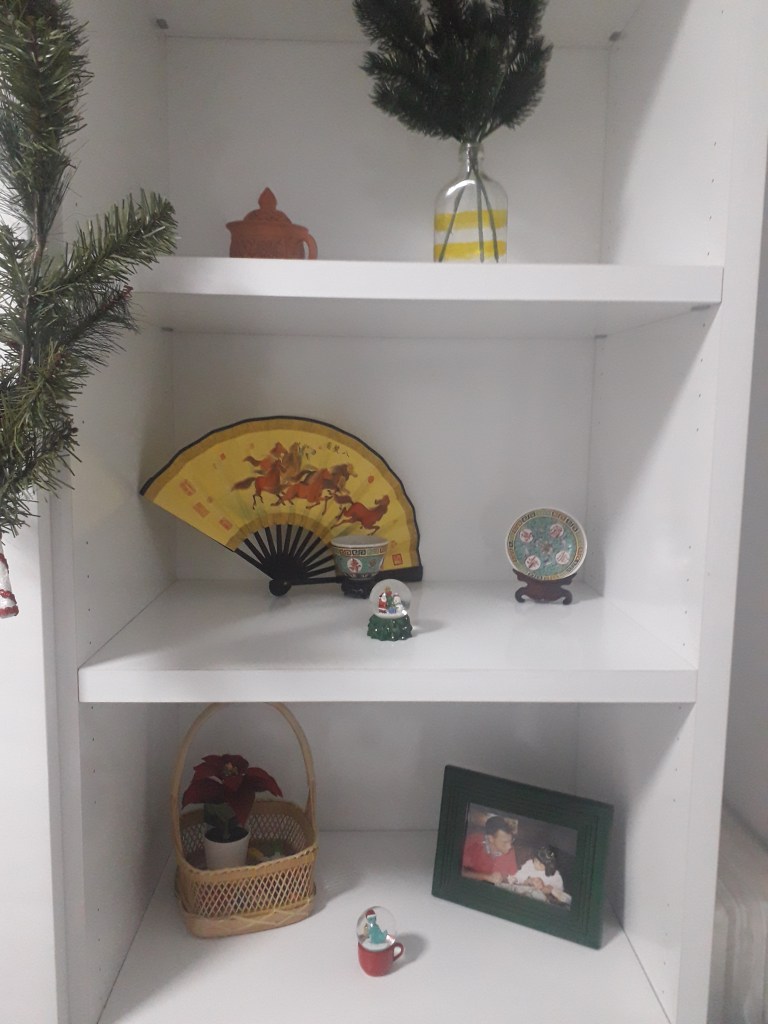
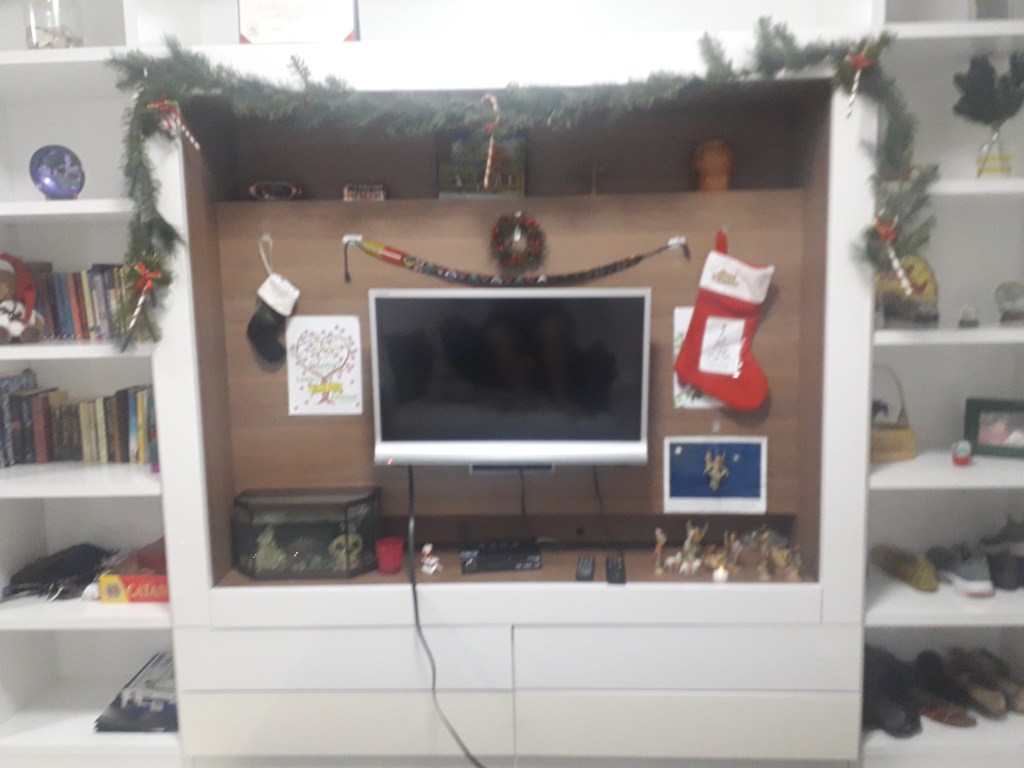
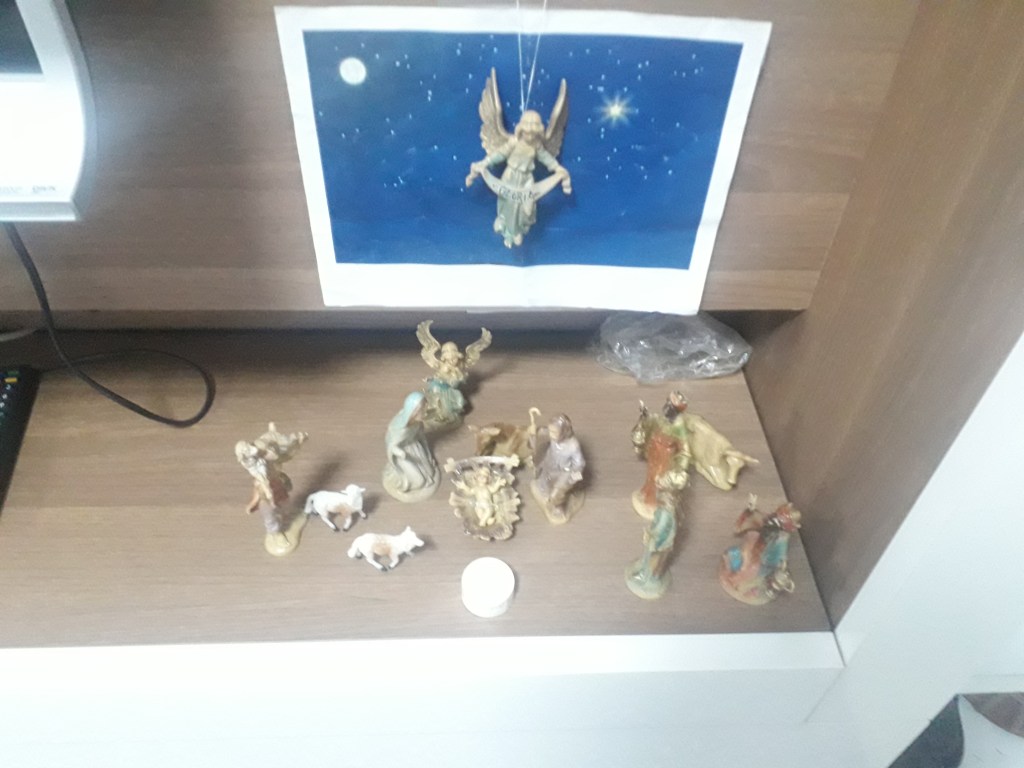
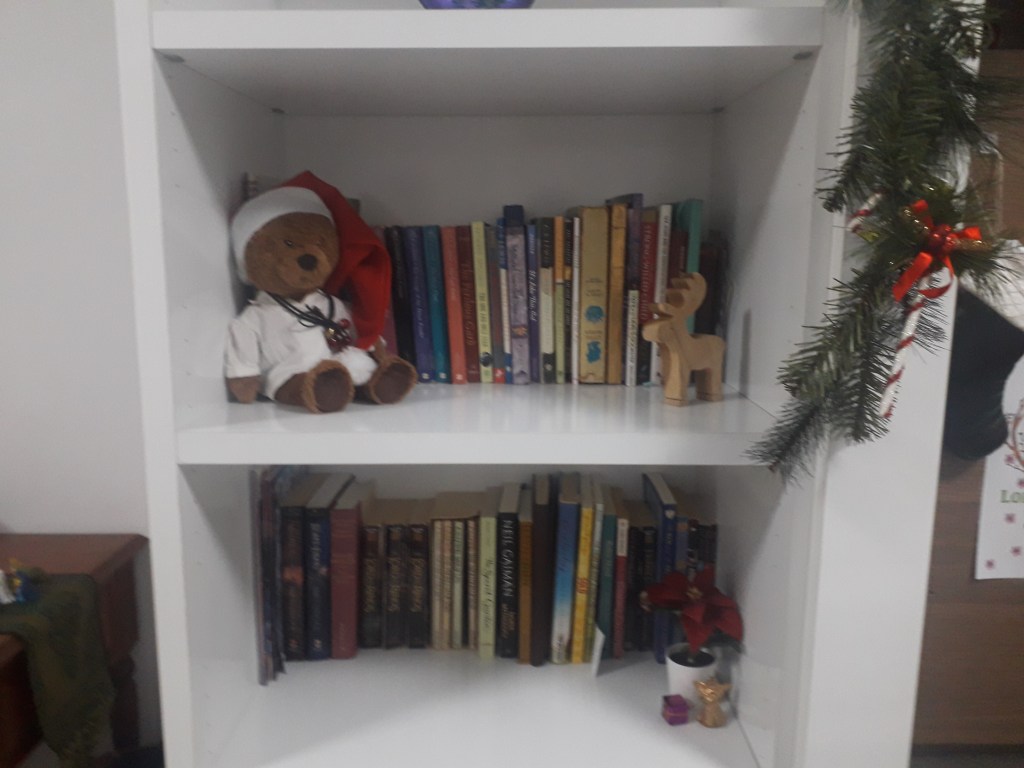
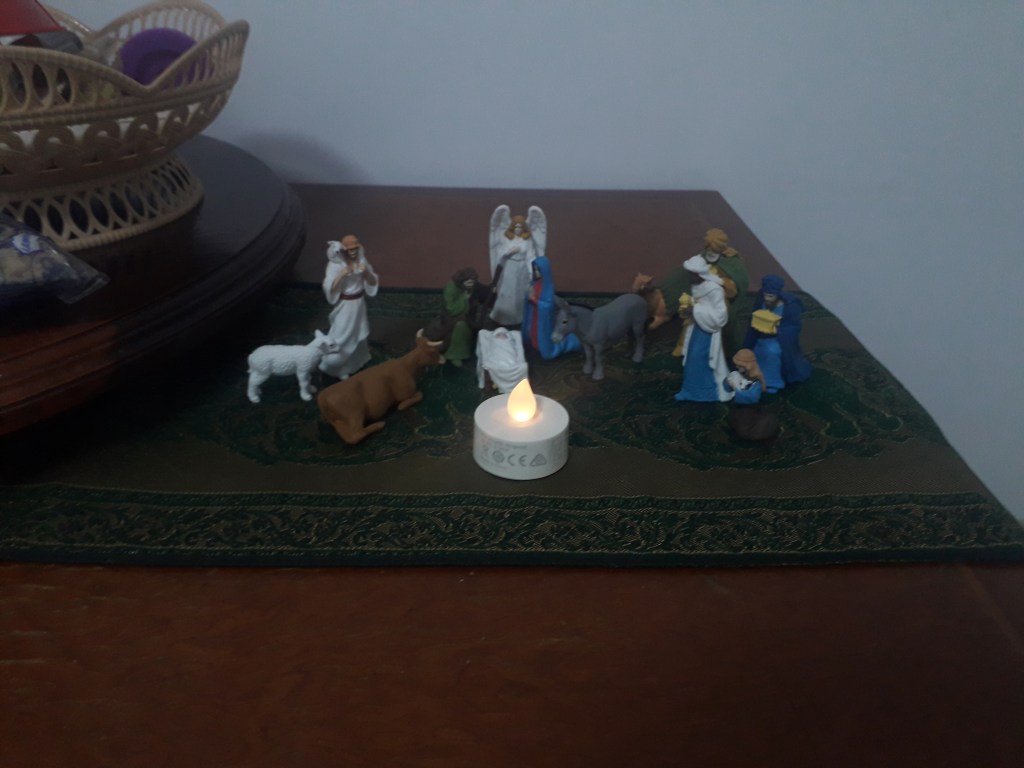
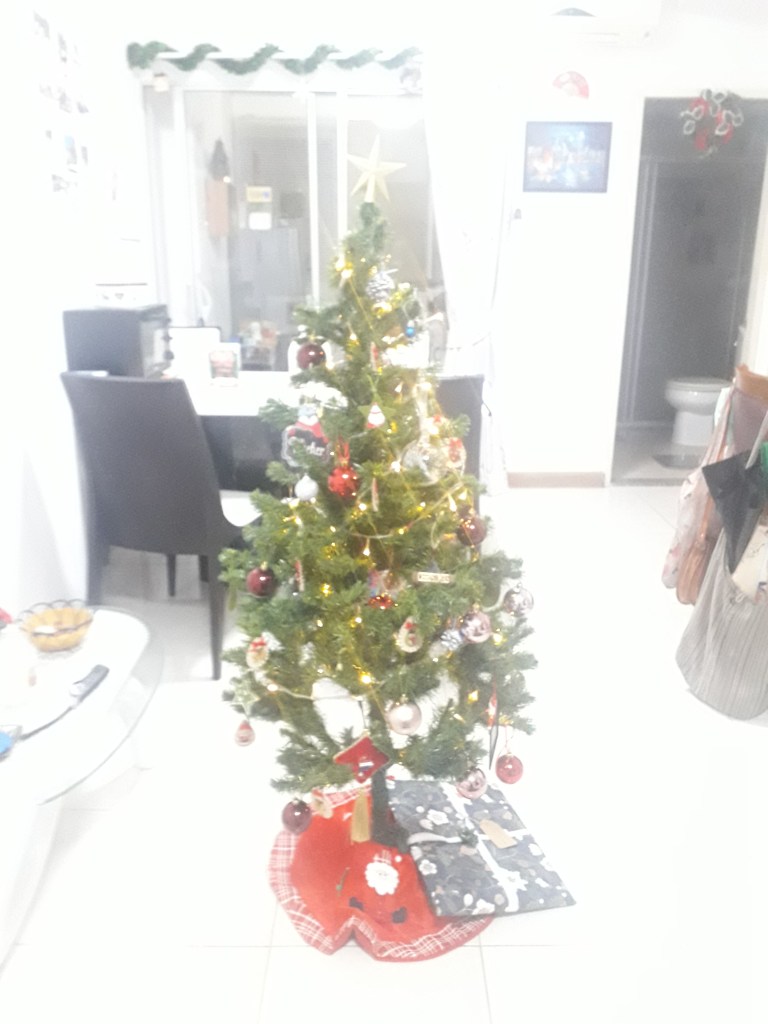
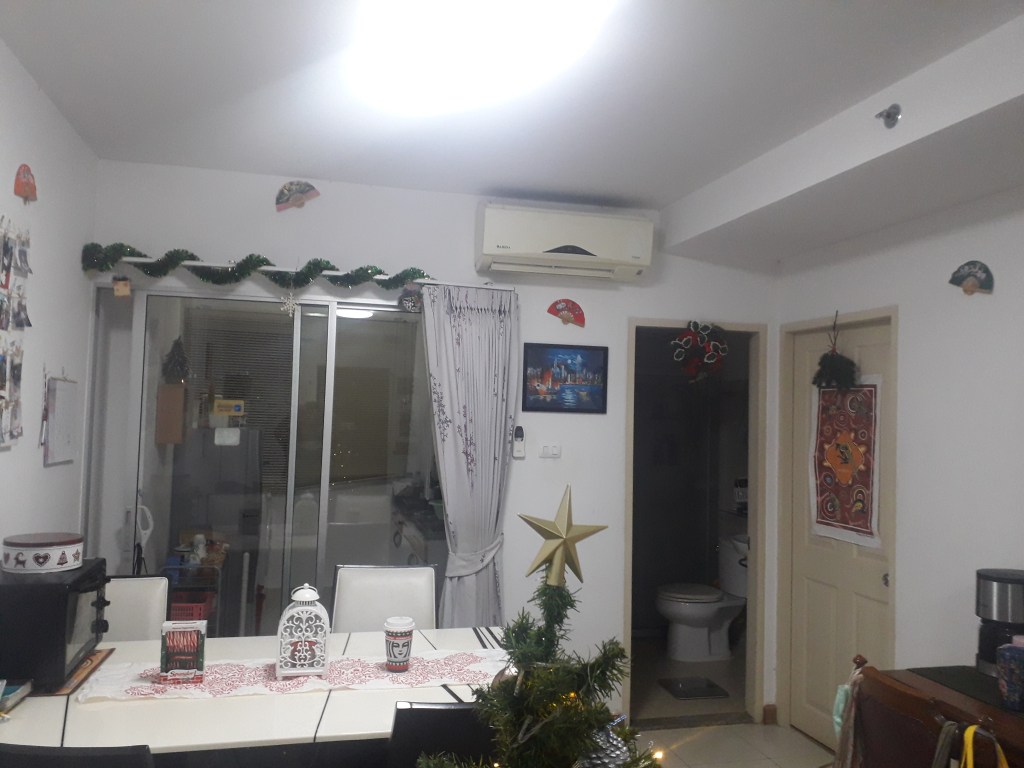
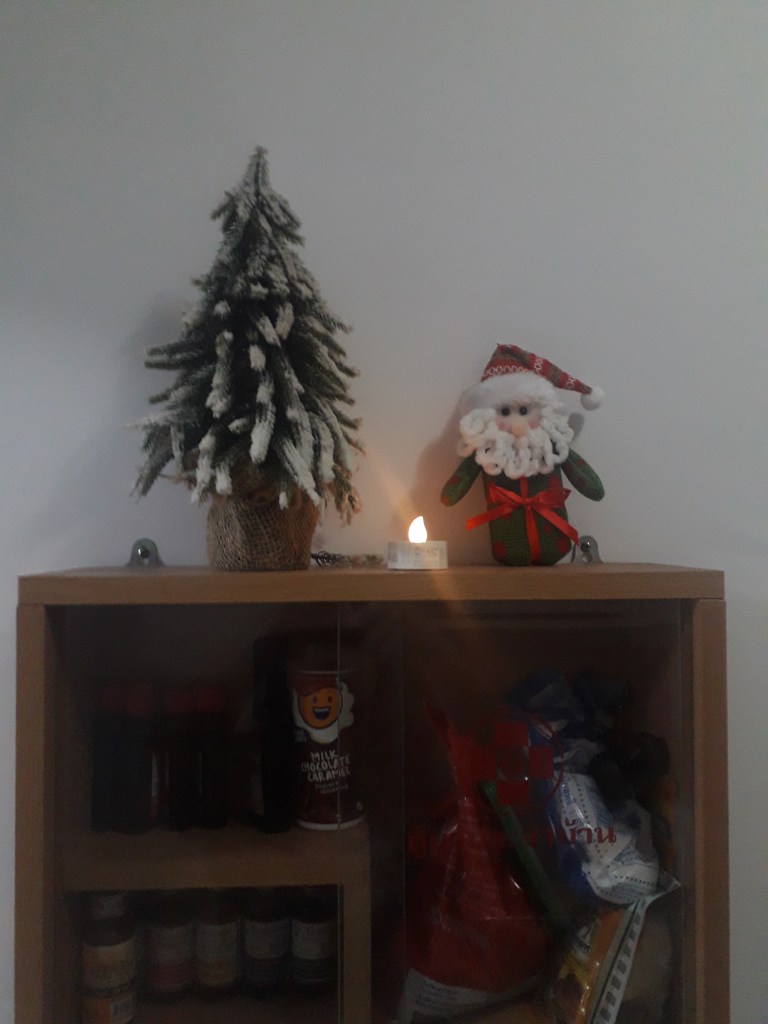
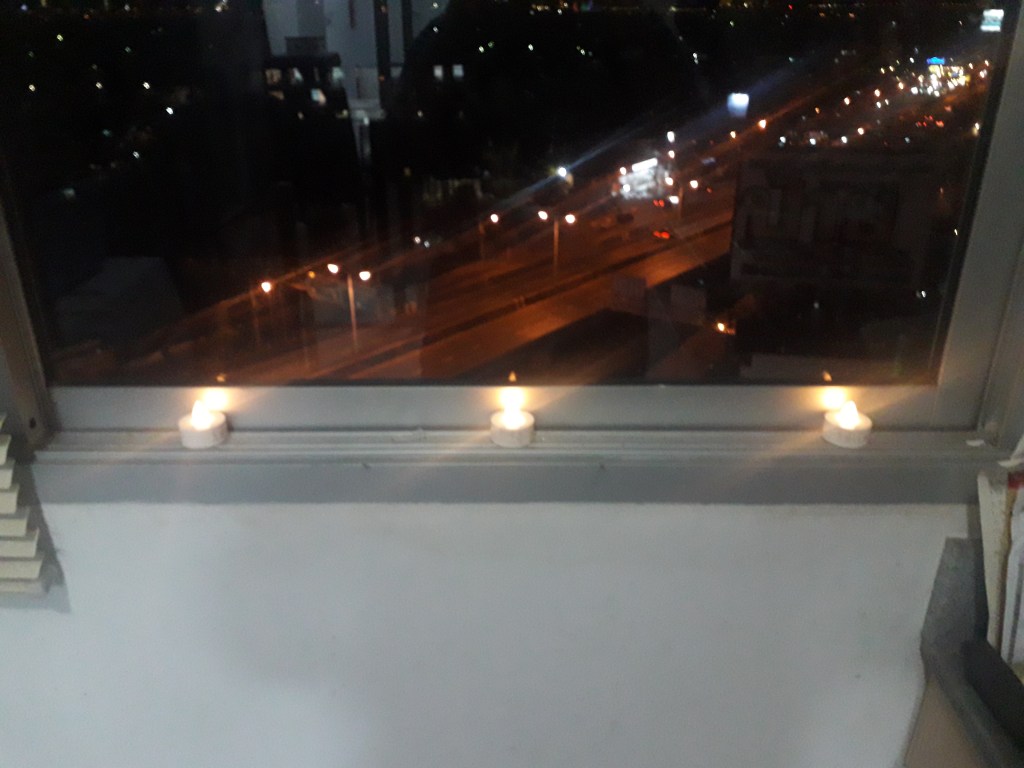
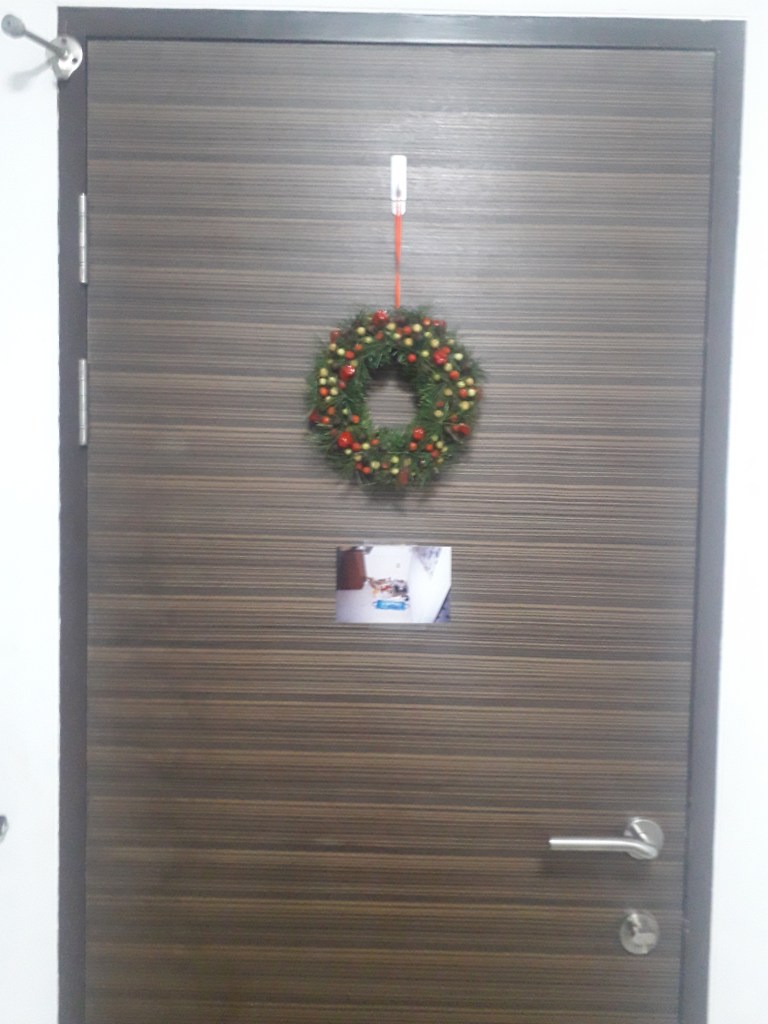
As a parting gift, enjoy some pictures of my apartment decorated for Christmas!

Be Thou My Vision (O Lord of My Heart)

Hello, friends and family! My sincere apologies for the long dry spell with no posts. I think I can speak for everyone when I say that this year has been crazy. This post has been in my mind and heart for a while–but I now finally have all the words to say it.

There is a story in the Bible that I have been unable to get out of my head during these many long, long months of 2020.

It stars Elisha, prophet of God. But, more importantly, it stars a truth that can change how we look at everything in life.

Set the scene: Elisha is the prophet of God in the nation of Israel. In this time, a prophet was many things: an advisor to kings, performer of miracles, but especially a deliverer of messages from God.  At this point, Israel is being attacked by one of many local enemies, the Arameans. Each time the Arameans try to make a move against Israel, God tells Elisha their plans, and Elisha tells the king of Israel.

After a few repeat cycles of this, the king of Aram starts getting fed up. He suspects a spy in their midst. Nope, his men tell him, it’s that meddling prophet, Elisha! We need to get him!  He’s in a city called Dothan! Let’s get him now!

The scene switches to Elisha and his servant in Dothan. One morning, Elisha’s servant wakes up to a horrible sight.  The city is surrounded by Aramean’s troops.

“Oh no, my master!” The servant cries. “What are we to do?”

“Do not worry,” Elisha replies. “For those who are with us are greater than those who are with them.”

Elisha prays for the servant’s eyes to be opened, and the servant sees that “the mountains were full of horses and chariots of fire surrounding Elisha”.

Elisha was completely protected by God. And he could see it, because he trusted that God was God, no matter who came against him.

His “vision” was not what he could see around him physically.  His vision was God.

One of the oldest recorded hymns (and my personal top favorite) is titled “Be Thou My Vision”.  It speaks of the many things that God is and can be to His people, with singer asking God to be all those things to him/her.

The verses are good, but the first phrase of the hymn is what has been on repeat in my brain lately.

Be Thou my Vision.

What does it look like for God to be our Vision—our way of seeing and framing life?

If God is our Vision, what does the change about how we react to the trials of life?

This year has been hard, and sad, and fraught with many things that make me want to tear out my hair in frustration.  But Covid is not my Vision.  Border closings and quarantines and missing family are not my Vision.  Riots and political strife and anger are not my Vision.  Work craziness is not my Vision.

God is my Vision.

I don’t always do a great job at letting that be so.  There are many days when everything but God is my Vision.  I have work to finish, papers to grade, students to wrangle…often all before 9 a.m.  I worry and wonder about the future of my own country and many others.  I have to regulate myself, as I’m working to make healthier choices and take better care of myself.

I have so many other things that could be my Vision.  But only one who is worthy.  Only one who will give me the correct perspective on life.

In the story, Elisha’s servant was looking at things from a human perspective.  And, from a human perspective, they were screwed.  His Vision was in the chariots and horses that surrounded him and Elisha. 

But Elisha could see things through God’s perspective, so he knew that they were saved.

If God is our Vision, it means that we trust Him enough to know that he works things out for our good.  Not our ease, not our comfort, not our American Dream blessing—but our GOOD.  Our sanctification.  His will is for us to look like Him. 

God does not take His hands off our lives for a moment.  So, when the chariots and horsemen come, stop for a moment.  Close your eyes.

Ask for God to be your Vision, and for Him to open your eyes to see Him surrounding you.

You might not immediately see fiery angels.  (I have yet to see any, to my immense disappointment.)  But you might suddenly feel a break in the weariness.  Or a new courage where you had none.

“The Lord will fight for you.  You need only to be still.”

Face the storm.  Face the war.  Face the battle.  And let the cry of your heart at each point be:

“God, be my Vision.”

*******************************************************************************

I’m doing well here in Thailand. I miss you all back in the States, but I’m enjoying my students and the new challenges of my job. We have our October Break in a couple of weeks (thank goodness!) and I am looking forward to visiting Chiang Mai, in the north of Thailand. Let me know in the comments if there is anything I can be praying for people about. I want to be better at doing updates in the coming months, so look for another post soon. Love you all!

Easter and Covid-19

**Note: Half of this was written two weeks ago, and half within the last week.  I couldn’t finish my thoughts when I started this, but I finally was able to over the last few days.

*************************************************************************************

This is the post I promised myself I wouldn’t write.

I said I wouldn’t talk about Covid-19 and everything that is happening right now.  I said there were already too many voices, too much noise, too much craziness.

But my heart is overflow to spilling and writing is the best tool I have for letting all my emotions out.

It’s sunny here today at school.  Quiet, as has become the new normal.  Eventually, there will be shrieks and shouts as all the teacher’s kids start water-sliding down the metal playground slide onto foam pads.  The toddlers will soak in a blow-up pool. Parents and teachers and teacher-parents will stand around, talking, trying to make sense of it all.

I spend my days making videos, creating assignments, trying to find a moment to write and breathe and read among all the chaos.

I try to find the words to pray.  A lot of times, they don’t come.

It says in Romans 8 that the Holy Spirit intercedes for us.  That He knows what our groanings mean. I like to think He also knows what our silence means, and our tears.

I learned they just closed school for the rest of the year in my home state Virginia.  I don’t know what will happen here in Thailand. Everything is on a “soft lockdown”. People can still go out, but sit down restaurants, movie theaters, bowling, swimming pools, bars…everything is closed except the grocery stores and basic convenience stores.

(If they close 7-11 here, we are truly in the apocalypse.)

My heart aches for all the high school and college seniors who have worked so hard, and now won’t get their public celebration of success.  It breaks for all the families and friends that have to hold each other at arms length (or 6 ft). It hurts for all the nurses and doctors who have to watch cases come in, day after day.

Everyone is desperate and worried and yes, afraid.

I said on a Facebook post that I wasn’t afraid.  I don’t quite know if that’s true anymore. I’m not really afraid, but I’m tired and sad and stressed and worried, and a million other emotions that are the equivalent of staring at a black hole, wondering what it is going to come out.

Right now, the only sound is the hum of my air conditioning unit.  A mostly eaten banana sits on my desk. I check SeeSaw in vain to see if my kids have done an assignment.  Nope.

I miss them.  I’ve poured my heart and soul into most of these kids for two years straight.  Tried to teach them everything I could. Seen their ups and downs.  

The world is holding its breath.

*******

It’s two weeks later.  Almost Easter. Everything is still “softly” locked down, but more restrictions.  In some ways, the streets are still so full of life. But that life is tempered by the fact that everyone is wearing a mask.  Literally.

They closed the playground.  No more random shrieks in the middle of the day, at least from there.  They have a “kids’ club” to make sure teacher’s kids have help and space to do school work.

I work with a few of my kids twice a week.  I didn’t realize how much I would miss them.  Empty classrooms are eerie places, haunted by the strangeness of silence.  I complained about how loud my kids were. I forgot that no noise is just as deafening.

The government has forbade all schools from opening until July 1st.  I won’t have my students all together in my classroom ever again. This coming week is our school Spring Break.

Tomorrow, we celebrate Easter.  The triumph of God over sin, light over darkness, death over life.

I’ve been doing a lot of quiet thinking about the significance of it all.

God was not surprised by Covid-19.  And He is not mocked by it, either.

Everything about this situation is less than ideal.  It’s hard. It’s draining. Every day feels like a war, fighting an enemy we can’t even see.  Oftentimes the enemy is our own minds.

But it’s Easter.

And the tomb is still empty.

I was blessed to be able to go to Israel my sophomore year of college.  I’ve stood in both contested spots of where Jesus died, was buried, and rose again.  

No photo description available.

No photo description available.

Because Jesus killed death, I can look into a world where everything has gone wrong, and know that God is greater.

This has been a weird couple of months.  The whole world has turned upside-down. Tomorrow, I won’t be in church, like every other Easter of my life.  This week, I won’t be going anywhere exciting like I had planned to do in January.

It’s hard not to know what tomorrow is going to bring. 

All of this has made for an Easter that feels like it’s snuck up on me.

But I guess that’s part of the point.  There is a Dietrich Bonhoeffer quote which states that Christmas always comes, no matter what our personal emotions are on the subject.  The same is true for Easter. It is here, even in the midst of this global pandemic and panic.

God is still worthy of worship; not because life is good, but because He is.

When we were still sinners, THOUGH we are still sinners, though we choose trivial, frivolous, meaningless things over Him, Christ died for us, and rose again in power.  

This will eventually pass.  Everything bad always eventually does.  And we will grieve for the things we lost, but also look around at the things we have gained.  New skills, time for reflections, time with family, time learning new technology for my classroom.  This time may not feel like a gift, but I don’t want to waste it.

Happy Easter, everyone.  No matter what, Christ is risen.  Take your emotions and fears and failings of this moment to Him.  I promise He will deal gently with them. He does it every day with me.

“Though the fig tree does not bud

    and there are no grapes on the vines,

though the olive crop fails

    and the fields produce no food,

though there are no sheep in the pen

    and no cattle in the stalls,

yet I will rejoice in the Lord,

    I will be joyful in God my Savior.” –Habakkuk 3:17-18

No photo description available.

Death, Observed

“So God’s not real!  Because He didn’t make him better!”

Inside, my heart fell.  I had been expecting this.  This was from a student that constantly asks all the hard questions to everything spiritual, from why you bow you head to pray, to the fact that her grandmother told her that Thai people die for switching religions from Buddhism.

“No.”  I said, quiet.  “No, that’s not true.”

Rewind a little over a month.

One of my co-workers had been sick with a heart condition last year but had gotten better enough to be released from the hospital and had seemed fine.  In November, he had gone back to the hospital.  It was clearly a fight for his life.  The school prayed, as hard as anyone ever does.

On Thursday night, admin sent out an email that he had passed away, leaving behind a wife and three kids.

We had a letter to read to the students on Friday, telling them what happened.  There were mixed reactions all around.  Some accepted it.  One of my students just said “so he’s in Heaven”, and let it go.  Some were more confused.

I tried to answer them as best I could.  I said that God sometimes doesn’t make us better on earth, but in Heaven.  It doesn’t mean He isn’t real, or that prayer doesn’t work.  It just mean’s He’s smarter than us.  That He has another plan.

I don’t know if my words made a difference.  It’s hard, with a language barrier and a culture barrier, to explain some things.

Later that day, I was sobbing about the gulf of questions from my students I felt ill-equipped to answer.

And I heard a gentle Voice say, “My love is stronger than their anger and confusion.”

As Christians, there is a fear and a real possibility that people will use death as an excuse to push away God.

When I was 12, one of my best friends died after complications with Cystic Fibrosis (a lung disease).  It shattered my world.  Before that, dying was for old people who had lived a full life.  Before that, if you prayed hard enough for something (I thought) God was obligated to give it to you.  Isn’t that what happened in the Bible?  The sick healed and the dead raised?  So why wasn’t it happening now?  Was there something wrong with my faith?

Twelve years later, I now know that faith is a gift (Romans 12:3).  I know that God is smarter than me, even when He answers my prayers with “no”.  And I know that hard things don’t mean that God is far away or not real.  They mean that He is closer than I ever dreamed.

Most of all, I know that He is still good.  It’s the world that isn’t.

Another one of my students asked, “If Mr. Daryll was a nice teacher and really good, why did he die?”

Ah, yes, the age-old “why do bad things happen to good people?” question.

In Mere Christianity, CS Lewis talks about us living in enemy-occupied territory.  The devil is still the “prince of the air”.  The world is screwed over by sin and nothing like it was intended to be in the beginning.  Jesus came to earth to begin the process of setting things right.  But it will not be finished in our lifetimes.  And in the meantime, there is still suffering, and sin, and yes, death.

The verses that have been running around in my head these last two days are in 1 Thessalonians 4:13-17.  Verse 13 is the one I always remember whenever I am faced with death in my life:

“But we do not want you to be uninformed, brothers, about those who are asleep, that you may not grieve as others do who have no hope.”

Death sucks.  One of my favorite images from the Gospels is Jesus weeping at the tomb of Lazarus, His friend.  God knows better than anyone that death is the greatest crack in our fallen world.  Grief is good, and it is good to mourn.  BUT, when Christians mourn for other Christians, there is a difference.

We say goodbye, but not forever.

“For since we believe that Jesus died and rose again, even so, through Jesus, God will bring with him those who have fallen asleep.  For this we declare to you by a word from the Lord, that we who are alive, who are left until the coming of the Lord, will not precede those who have fallen asleep.  For the Lord himself will descend from heaven with a cry of command, with the voice of an archangel, and with the sound of the trumpet of God. And the dead in Christ will rise first. Then we who are alive, who are left, will be caught up together with them in the clouds to meet the Lord in the air, and so we will always be with the Lord. Therefore encourage one another with these words.”

“The last enemy that shall be destroyed is death.”  And I can’t wait for that day.  But until then, I want to show the world what it means to mourn well.  To care for those left behind well.  To let my students see that all the things their teachers tell them about God aren’t just true in the good times, but in the bad times, too.

I’ll close this with a poem that I wrote three years ago.  I think it does as good a job as anything at summing up my thoughts on death, and what it means as a Christian to deal with it:


I hate death

I hate it

I hate the way it takes

And takes,

And takes


I hate the hole it leaves

The silence where a voice should be

The endless list of never-to-knows

All the stories never told


Someone’s suffering is ended

Ours begins


I hate death

I hate it

I hate the way it takes

And takes,

And takes


I hate the aching chest

Constricted throat

Wet face

A soul; red, raw, and scraped


So I went to the Master of life and death

The one who inhabits eternity

And I said, “Oh Lord, my God,

I hate death.”


“When oh when will this suffering end?”


And the Master reached down

To wipe the tears out of my eyes

And He said

“My child, I hate it, too.”


“So do you know what I have done?”


“I died.”


“I took on the pain, the loneliness, the shame

The wrongs and evil of all who will be or who came

And I died.”


“But then…

Then I rose.

For I am God and none can hold me.

And if you come to me, I will make you an heir

To this legacy of victory.”


“My love, my little one

I hate death more than you ever could.

So I killed it.”


I killed death

I killed it.

I killed the way it takes

And takes,

And takes


I killed the hole it leaves

The silence where a voice should be

The endless list of never-to-knows

All the stories never told


Because resurrection is a promise

And the world to come is a reality


And yes, on this earth,

I know there is still

The aching chest

Constricted throat

Wet face

A soul; red, raw, and scraped


But listen, my beloved

This end is not the end.”


The Wonder of All Wonders

God never does things the way we expect.

This does not mean that God is erratic, unstable, or doesn’t have a consistent character.  Scripture is very clear that He is “unchanging,” in the sense that He is always Himself.  He has patterns to His actions with human beings.

And one of those patterns is never playing by our rules.

Humans come up with the most elaborate bureaucracies and intricate, complicated societies.  We all know how things are “supposed” to work.  Obviously, we need order and structure in society, or everything breaks down.  But when keeping the status quo interrupts the greater concerns of mercy, justice, charity, etc., that is when God takes pleasure in messing up our expectations.

You see it all the time in the Gospels.  Jesus does something that technically breaks “The Law” (usually a human add-on that complicated a more straightforward command of God).  The religious leaders are annoyed.  Jesus shows why what He is doing is more in keeping with the desires of God’s heart.  The religious leaders are humiliated; the disciples learn a lesson.  Rinse, repeat.

To a not-so-secretly rebellious soul like myself, these stories appealed to me as a child (and now).  Tradition is great; but people are always more important.

Christmas celebrates the official opening of God’s Ultimate Plan.  The plan that would rescue humanity from its own worst enemy: ourselves.  The plan that would end with sin forever beaten.

And it began with…a baby.

We know the story, so it feels natural.  But for the world Jesus was born into, it was anything but.  The Jews suffered under the oppression of the Roman Empire.  The last recorded prophet had been 400 years prior.  The religious elite cared more about their own power, wealth, and safety than providing spiritual guidance.  People were waiting for a Savior.  They expected a king.  Someone brave and strong and charismatic, like David of old.

Instead, they got a baby, born to a teenage girl from a nothing village.  Galilee was the equivalent of Hickstown.  Mary was no one important in their eyes.

God became weak to make us strong.

I was inspired to make this post after my Advent reading today.  I honestly can’t improve on Bonhoeffer’s words, so I’m just going to share it verbatim (bolded emphasis is mine):

“God travels in wonderful ways with human beings, but He does not comply with the views and opinions of people. God does not go the way that people want to prescribe for Him; rather His way is beyond all comprehension, free and self-determined beyond all proof.

Where reason is indignant, where our nature rebels, where our piety anxiously keeps us away, that is precisely where God loves to be.  There He confounds the reason of the reasonable; there He aggravates our nature, our piety—that is where He wants to be, and no one can keep Him from it. Only the humble believe Him and rejoice that God is so free and so marvelous that He does wonders where people despair, that He takes what is little and lowly and makes it marvelous.  And that is the wonder of all wonders, that God loves the lowly…God is not ashamed of the lowliness of human beings,  God marches right in,  He chooses people as His instruments and performs His wonders where one would least expect them.  God is near to lowliness; He loves the lost, the neglected, the unseemly, the excluded, the weak and broken.

That is the unrecognized mystery of the world: Jesus Christ.  That this Jesus of Nazareth, the carpenter, was himself the Lord of glory: that was the mystery of God.  It was a mystery because God became poor, low, lowly, and weak out of love for humankind, because God became a human being like us, so that we would become divine, and because He came to us so that we would come to Him.  God as the one who becomes low for our sakes, God in Jesus of Nazareth—that is the secret hidden wisdom that “no eye has seen nor ear heard nor the human heart conceived” (11 Cor. 2:9)….That is the depth of the Deity whom we worship as mystery and comprehend as mystery.”

***

When I was kid in Sunday School, we sang a song (whose name I’ve long forgotten) that said, “He’s the king of a kingdom upside-down, if you wanna go up, then you have to go down…”

The Bible is full of this paradox.  Loose your life to save it.  Become weak and be made strong.  Win by sacrificing everything.

Become king by being born as a baby, to die.  This is the mystery: that God does everything the opposite of how we think He should, and it works!

In our lives, it is often less glamorous.  Become more patient by teaching children that call out your name hundreds of times in class, to ask about something you just went over.  Learn grace by reprimanding the same behaviors over and over.   Practice excellence by making sure you put away all your students’ ipads at the end of the day.  Give up control and have peace.

It is Christmas: the time to be reminded that Christians belong to an upside-down kingdom of mystery, and serve a King who will always work everything out…according to His plan, not ours.

***

Virginia Beach (and close enough) friends, I will be home for Christmas on December 19th!  I come with presents and will need all the blankets and cocoa you can find.  (I live in a land where 82 degrees is considered “cool”.)  See you soon!

Season of Waiting

Hello from the far side of the globe!  Don’t worry, I haven’t died, it’s just been a very crazy month.  It’s now almost Thanksgiving in America, and soon Christmas arrives, which begins my absolute favorite time of the year.  In fact…I’ve already decorated and bought most of my presents.  ONLY because Thanksgiving isn’t celebrated in Thailand, of course. 😉  As of now, I have less than one month until I will return to the States for Christmas.

The whole Christmas/Advent/holiday time is an interesting one.  There is so much intense anticipation and longing built around one day, that it almost transcends Christmas Day itself.  It’s easy to get wrapped up in presents and plan and stress, and we shouldn’t let materialism take over, but the getting and receiving of gifts can help turn our focus to The Gift.  The reason for Christmas.

I, with no shame, love gifts.  I love getting them.  I love giving them.  I love the joy that comes with picking something out that you know will suit a person, or that they will love.  I love the thrill of receiving something that shows how much you are known and loved by someone.

But presents mean waiting.  Christmas means waiting.  Advent is all about waiting.

And waiting is not my favorite.

Patience is not my strong suit.  Most people could figure that out.  My closest friends and family could write a doctoral thesis on it.

That doesn’t mean I haven’t learned a thing or two about why it can be good to wait.

The past three Christmases, I’ve read an Advent devotional compiled from the writings of Dietrich Bonhoeffer.  Bonhoeffer was a German pastor during World War 2 that was executed for opposing the Nazis.  His writing contains a lot of themes appropriate for Christmas: God’s strength working through weak things, inner faith being more important than an outward show of religion, and the importance of waiting.  He writes:

“Celebrating Advent means being able to wait.  Waiting is an act our impatient age has forgotten.  It wants to break open the ripe fruit when its has hardly finished planting the shoot. But all too often, the greedy eyes are only deceived; the fruit that seemed so precious is still green on the inside, and disrespectful hands ungratefully toss aside what has so disappointed them.  Whoever does not know the austere blessedness of waiting—that is, of hopefully doing without—will never experience the full blessedness of fulfillment.”

The other week, after a long and trying day at school, I sat down and wrote in a fit of frustration that I, “keep waiting for the part where it gets better.  I keep trying and praying and hoping and I just come up empty.  I want the end where everything makes sense.”

This year has been a season of hardship and transition for myself and my family.  It’s been a lot of learning to wait and trust and work in the waiting.  It’s been hard.

I still don’t have “the end where everything makes sense”.  I don’t know when or if I will.  But Advent and Christmas remind me that even when nothing made sense and there was no hope, God came to dwell with us.

Emmanuel.  God with us.  God who does not run away from our filth, God who is not sullied by our impurity.  God who is not far away.  God who comes to us.

Airports and airplanes have become even more important and regular in my life than ever before.  It occurred to me the other day that airplane journeys are a lot like life.

You are in one place and can do a thousand and one things while you are waiting.  You can even get pretty good at distracting yourself from the fact that you are thousands of feet in the air, in a pressurized metal container. You eat, sleep, watch movies, play games…anything to keep busy.  But all the while, your mind is thinking about your destination.  You know that where you are is not permanent.

When you get off a plane, many things happen.  First, the plane must STOP MOVING.  Then, you get off, and wind your way through to immigration.  More waiting.  If you are going home, then you usually get a line that is less long than the one for “foreigners”.  When I go to Thailand, I have to go in the foreigner line, and it is hellish.  Then, after being deemed not a threat, you go through immigration, to the Baggage Carousel of Torture.  Is that my bag?  No, no.  Oooh, what about…no, not that one.  It feels like hours when it has been only two minutes.

You finally find your bags and go through a final area to where people are waiting.  Your heart is pounding.  You scan the crowd.  And suddenly, you see them. Friends, family, whoever has come to get you.  You can feel your body unclench and your soul relax.  You are safe.  You are known.  You are not alone.

You are home.  And you can rest.

GK Chesterton wrote a poem called “The House of Christmas” that says, “in the place where God was homeless, all men are at home.”  Christmas is a time where we remember that the waiting is worth it.  God comes to the ones who wait for Him.  He will not leave us stranded.

So as I bake cookies and pretend the temperature will go below 90 degrees, counting the days till Christmas Break, I will remember that waiting is a good thing.  A holy thing.  A thing that does not disappoint.

“Even youths grow weary and tired,

And vigorous young men stumble badly,

But those who wait for the Lord [who expect, look for, and hope in Him]

Will gain new strength and renew their power;

They will lift up their wings [and rise up close to God] like eagles [rising toward the sun];

They will run and not become weary,

They will walk and not grow tired.”—Isaiah 40:31

One Year Later

Exactly a year ago, October 17, 2018, I had just gotten off a plane in Suvarnabhumi International Airport. I was exhausted and mildly terrified. I had just left behind my entire life to start a new one half a world away. I had no internet, no friends, and no idea what I was getting into.

This morning, I got up and made coffee while listening to a worship song using data on my Thai phone. I thought about my upcoming Fall Break. I walked out of my apartment building and caught public transport down the street to school. I got breakfast at 7-11 and didn’t even think about which color the 20 baht note was.

One year down, I have a new home.

It’s a weird feeling, having lives in two places. Half the time in Thailand, I don’t really feel like a “foreigner”. I know I’m not Thai but I don’t feel overly American, unless I’m with a bunch of my coworkers discussing cultural differences. I just…am.

I have a lot of basic life skills for survival now, and I’m starting to become more confident with my job.

My job…has been nothing like what I dreamed it would be. And somehow, that has all been for the best.

If I had been successful at everything from the start, I would have learned that I’m allowed to rely on my own strength. Instead, I’ve learned that I am forced to rely on God’s.

This had been the running theme of my blog, because it has been the running theme of my life.

The other week, I was recommended a song called “The Summons” by whatever strange pattern YouTube uses to determine what I like. I had never heard it before, but the lyrics were enough to make me weep:

“Will you come and follow Me

If I but call your name?

Will you go where you don’t know

And never be the same?

Will you let My love be shown?

Will you let My name be known?

Will you let My life be grown in you

And you in me?

….

Will you leave yourself behind

If I but call your name.

Will you care for cruel and kind and

Never be the same?

…..

Will you love the ‘you’ you hide

If I but call your name?

Will you quell the fear inside and

Never be the same?

Will you use the faith you’ve found

To reshape the world around

Through My sight and touch and sound

In you, and you in Me…”

*****

Teaching is often romanticized. There are days I don’t feel like all the motivational sayings about “changing lives” are any bit true.

The other week, one of my co-workers said “I really don’t know how people who aren’t Christians handle teaching.” And to be sure, there are plenty of good non-Christian teachers. But the rigors of the job are so demanding, I know that without God, I would have gone running back to the States long before now.

One year down, I have less grandiose dreams. But I’ve also learned that sometimes, often, God calls us to be faithful in the tiny, mundane, wearying things.

Each of my 23 students is loved by Him more than anyone in the world. Before anything else, my job is to show that love.

It’s funny to look back at my first few posts in Thailand. So many things that were weird or hard back then are almost blasè now. I know my school and my “neighborhood” and my life.

But I want to keep growing and perfecting my craft. Just because I’m comfortable doesn’t mean I get to stagnate. I want to love people better. I want to be more patient with myself and others. I want to know God more.

So as I celebrate one year down and look forward to the future, I know I still have a lot of places to grow. But I’m thankful for the work in me that has happened.

One year later, the journey was long. But every step was somehow worth it.

Who’s Building This House, Anyway?

Who’s Building This House, Anyway?

Hello everyone!  I write you from the land of cheap fruit, insane humidity, and my always-crazy students.

The past month and a half has been…interesting.  My school is going through a lot of changes in its curriculum and structure, which leads to a lot of confusion as everyone tries to work out those changes on a practical level.

My students still drive me insane on a daily basis.  I still love them all.  I’ve had the chance to have some deep conversations with them already, in the middle of English, involving everything from how God speaks to people, to what happens after death and why I don’t believe in ghosts.  I pray for more of those question and answer times as the year goes on.

Outside of school, I’ve been to IKEA more times than I’ve ever been in a month (twice), experienced a special night market, watched endless amounts of YouTube, and almost single-handedly convinced the leader of our Wednesday night church group to introduce new songs.

When thinking about this update, I was wondering what the theme of it would be.  My life tends to run in themes as I learn things.  And as I thought, I kept coming back to a verse one of the admin shared at Orientation Week:

Psalm 127:1-3:

“Unless the Lord builds the house,

those who build it labor in vain.

Unless the Lord watches over the city,

the watchman stays awake in vain.

It is in vain that you rise up early

and go late to rest,

eating the bread of anxious toil;

for he gives to his beloved sleep.”
The verse gave me a sucker punch in the gut.  You see, I spent a lot of time last year “eating the bread of anxious toil.”  I was more tired than I had ever been in my life.  I wasn’t sleeping enough. (7 hours vs. 8 hours makes more difference than you know…) I spent endless hours agonizing over my classroom management and lessons and students and…everything.

Because I was trying to do it all myself.

As I’ve alluded to in previous blog posts, I’ve always been an independent person.  I was the kid in class that never wanted to do the group projects.  I never ask where the bathroom is in restaurants “because I can find it myself”.  If I’m honest, I quite enjoy the rush that comes from figuring things out on my own.

If I’m honest, I have issues with pride.

This verse is a reminder that whatever happens this year, God is building it.  I do my job as well as I can, in His strength, and He does the rest.

I want my soul to be at rest.  The bread of anxious toil is disgusting.

And in the moments where I am tempted to stress, I can almost hear Him say, “Who’s building this house, anyway?  You or Me?”

The day we come to the end of ourselves is never fun.  But there is almost a relief of finally admitting that we can’t do anything on our own.  It’s like letting out a breath that we’ve been holding all our lives, but never knew we were holding.

JRR Tolkien gets a lot of love on this blog via Lord of the Rings analogies.  But my favorite writer of all time is undoubtedly C.S. Lewis.  In his book Mere Christianity, he has this to say on the same theme:

“If you really get into any kind of touch with [God] you will in fact be humble—delightedly humble, feeling the infinite relief of having for once got rid of all the silly nonsense about your own dignity which has made you restless and unhappy all your life.  He is trying to make you humble in order to make this moment possible: trying to take off a lot of the silly, ugly, fancy dress in which we have all got ourselves up and are strutting about like the little idiots we are.”

This may sound harsh, but it’s really true.  When we stop pretending to be in control of everything, that is when God can really begin to work.  So I have to start my days, and end them, and remember in the middle, that God is building all the “houses” of my life in Thailand.  He will do what He has planned…and the easiest and hardest job of mine is to let Him work, and just do as He tells me.

*******************************************************************************

Next week, my school is about to have it’s yearly Overnight Camp.  It is 1 and ½ days of pure insanity.  Students are at the school Thursday afternoon into the evening, with Grades 4-5 sleeping on school grounds, and return for a morning and afternoon time of more festivities.  While it is a chance for students to play games and eat marshmallows, it is also a time when they get to hear the Gospel presented.

Our theme this year is Finding Forgiveness (based on Finding Dory, with an ocean theme to boot).  The main message is that forgiveness is not a thing we deserve or can ever earn on our own, but is given to us by God.

Please pray for all the teachers and students during this time.  Not only will we be physically and mentally exhausted, but we will also need wisdom as we talk about spiritual things with our students.

Thank you all so much for your support.  Feel free to shoot me a comment letting me know how things are going back in the States.  Are the leaves falling yet?  What’s it like to have cold weather?

Love you all; “see” you with the next update!